By: Nick Janco, NFI Certified Master Hearth Professional

Designing an Outdoor Space Around a Patio Heater:
Layout Ideas to Maximize Warmth and Style
Last Updated: December 2, 2025
Designing an outdoor space goes beyond furniture, landscaping, and decor – it’s also about comfort. Adding patio heaters is of the best ways to make sure your outdoor living space stays open and ready to enjoy year-round, even in the colder seasons.
Whether you’re creating a brand-new patio space or simply refreshing what you already have, the right patio heater layout and heat-planning strategy can transform a chilly space into a warm, glowing gathering spot.
In this guide, we’ll provide some expert tips on designing an outdoor layout around a patio heater. Explore placement options, style inspiration, and practical heating considerations, so you can build a space that feels both comfortable and effortlessly put together.
Why Patio Heaters Should Be Part of Your Outdoor Space
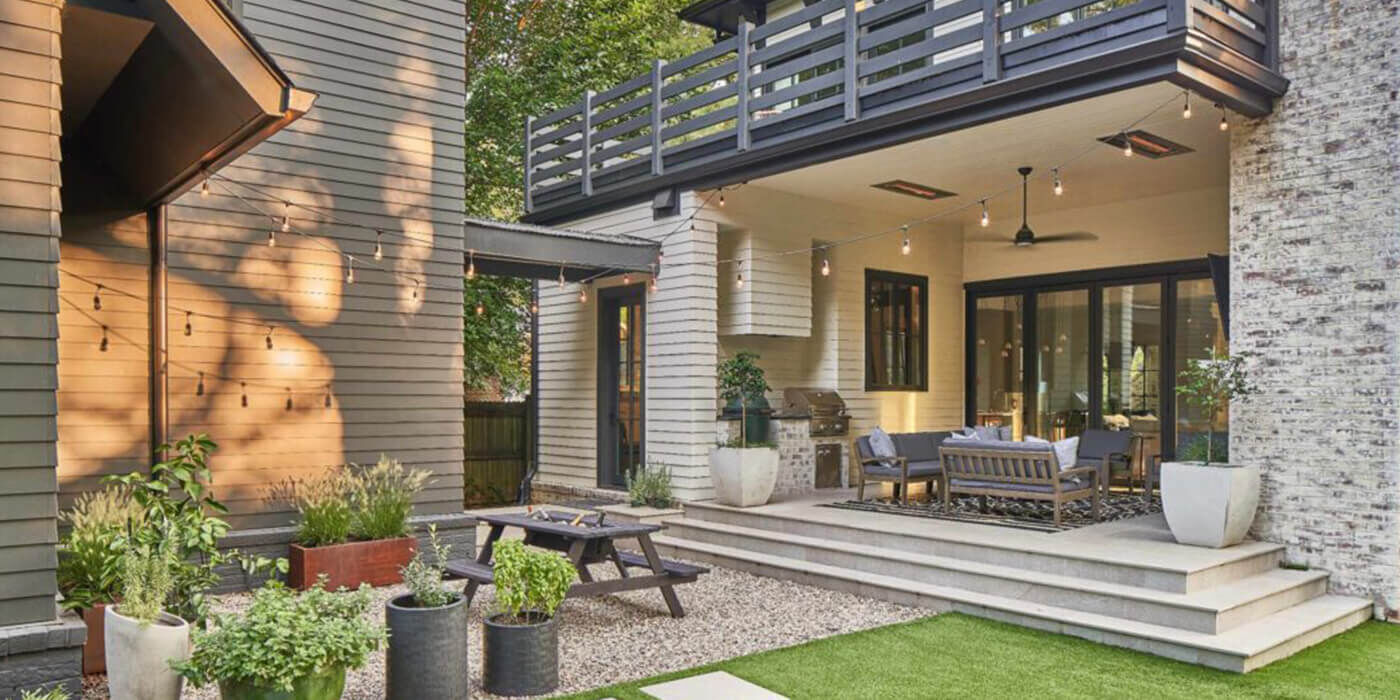
Outdoor heaters aren’t just functional accessories; they’re architectural anchors. Much like a fire pit or outdoor kitchen island, a heater influences how people gather and move through a space. When thoughtfully placed, a heater adds warmth, ambiance, and structure — all while enhancing the look of your patio.
From freestanding propane patio heaters to wall or ceiling-mounted electric models, today’s options give you the flexibility to treat your heater as both a design element and a comfort solution.
That’s why incorporating your heater early in the outdoor space design process makes everything else — like furniture, décor, traffic flow — feel more intentional.
Choosing the Right Type of Patio Heater for Your Layout
To maximize warmth and style, you’ll want to choose a heater type that aligns with your existing space or design vision.
Freestanding Heaters
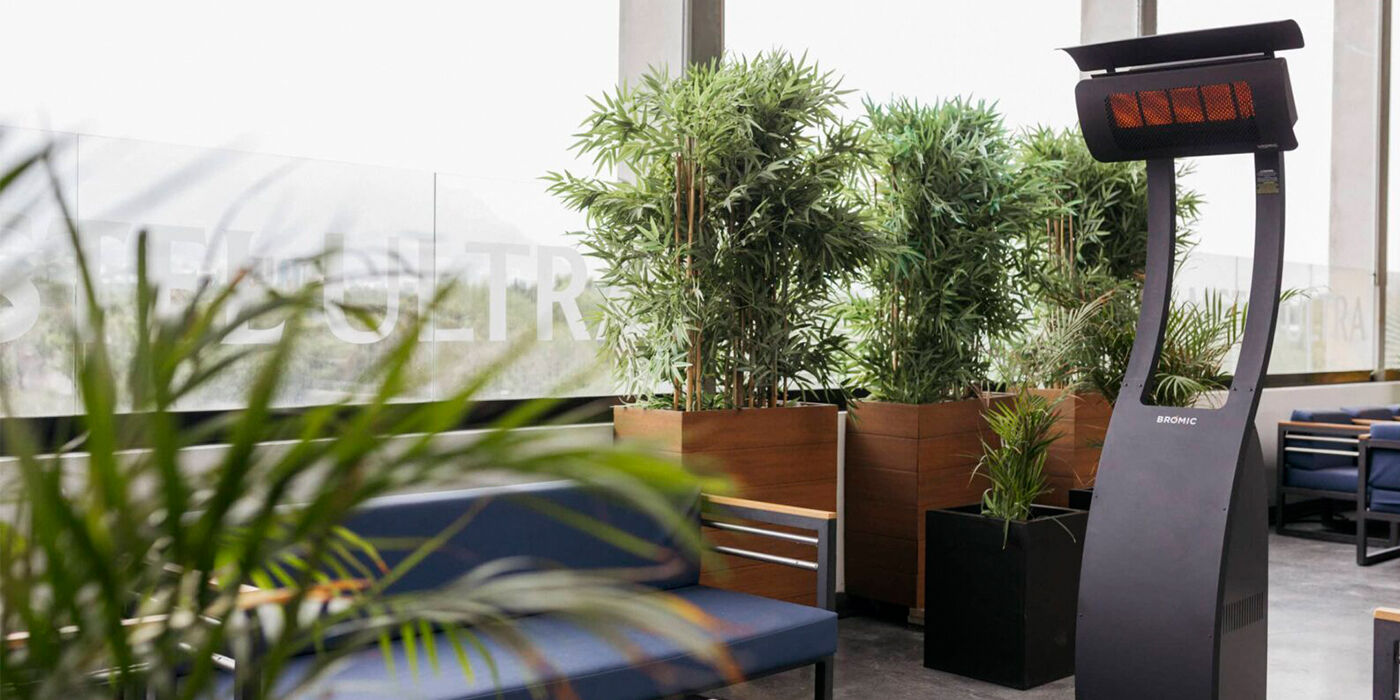
Freestanding heaters are the classic “mushroom top” propane models or slim-line modern tower heaters.
Great for large open layouts, freestanding heaters don’t require wiring or mounting — you just set them up and go.
They’re portable, allowing you to re-arrange your space or warm different zones as needed. You can also easily store a freestanding heater during the off-season.
- Great for: flexible layouts, larger patios, renters
- Style notes: adds vertical presence, creates a focal point, pairs well with outdoor seating
Mounted Heaters
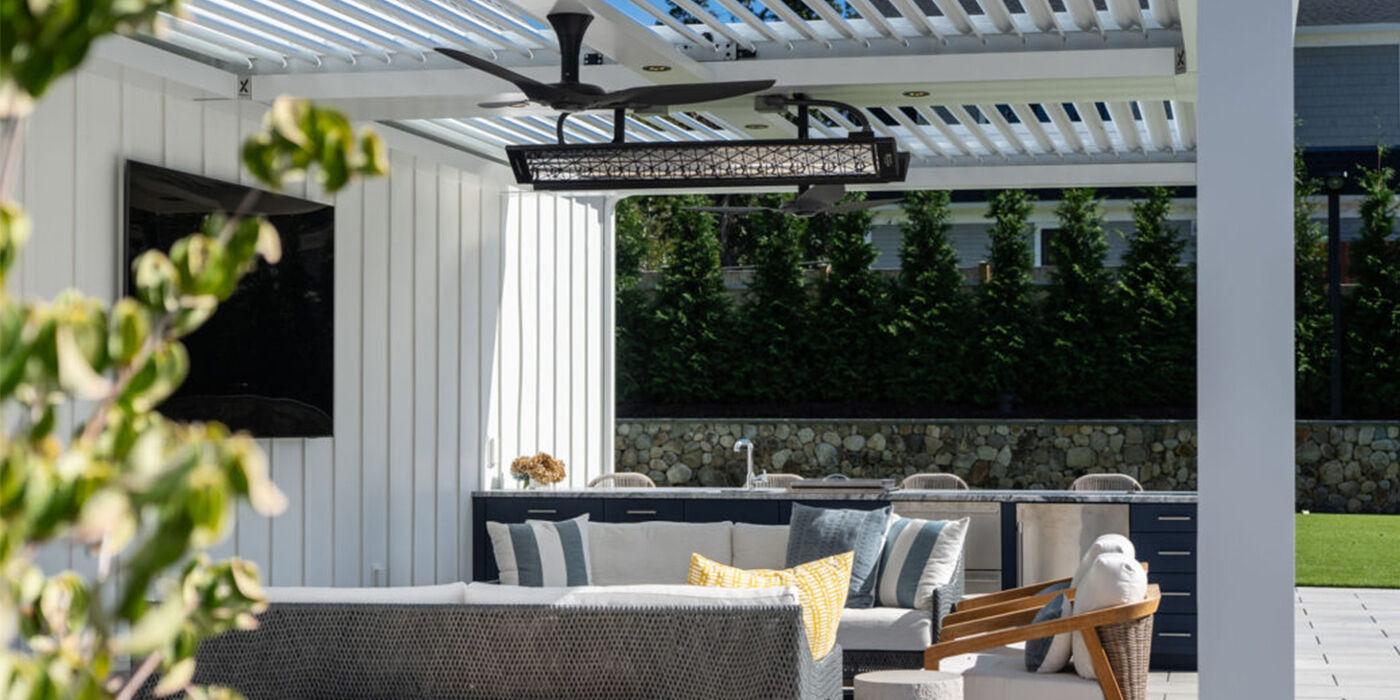
These heaters mount to walls, ceilings, or pergolas. Mounted heaters (especially infrared types) can direct warmth exactly where you need it — ideal for seating or dining zones — and because radiant heating warms people and objects directly (not just the air), heat loss is reduced.
Because they’re affixed to a wall or ceiling, mounted heaters leave the patio floor entirely free, which is useful for small patios or busy seating areas.
- Great for: covered patios, modern homes, space-saving design
- Style notes: sleek, minimal, disappears into architectural lines
Tabletop Heaters
Tabletop heaters provide both glow and warmth, making them ideal for cozy spaces that need to stay uncluttered.
- Great for: small patios, balconies, intimate dining setups
- Style notes: charming and atmospheric, doubles as centerpiece lighting
Fire Columns or Gas Towers
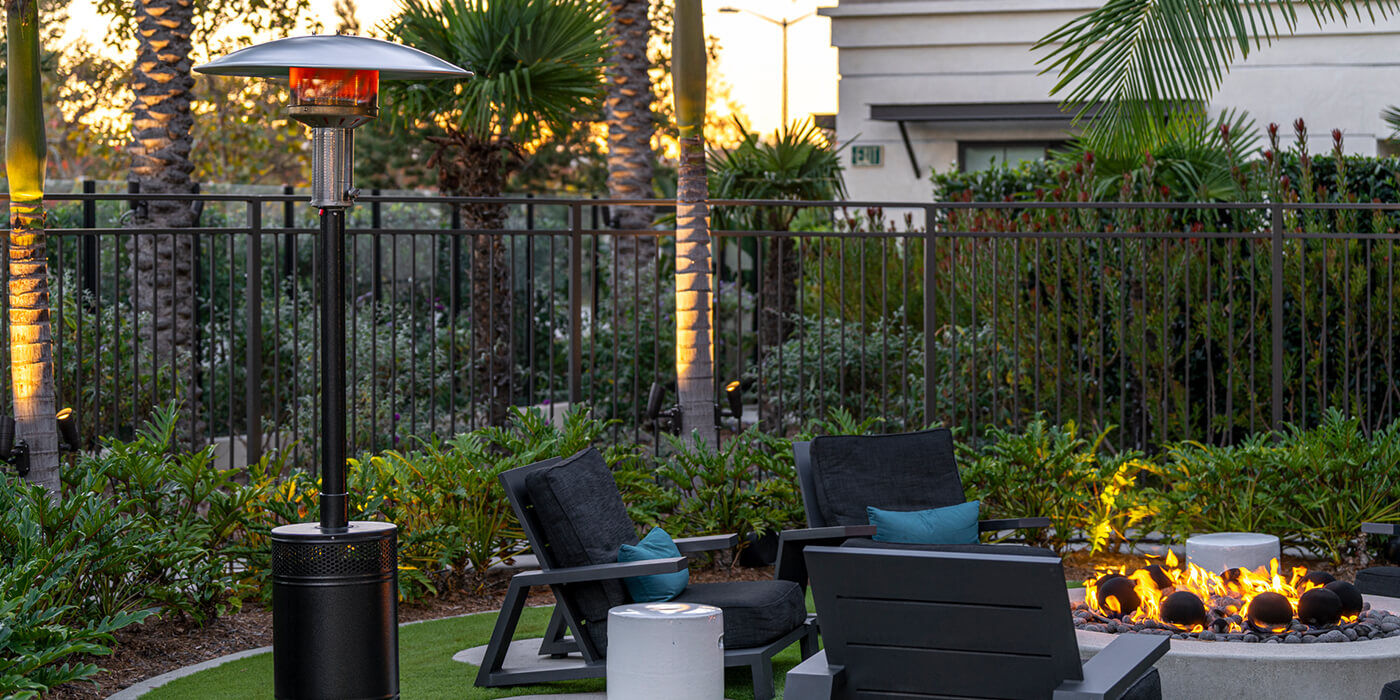
If your layout relies on mood and lighting, flame-based towers feel luxurious and architectural.
- Great for: creating ambiance with flame visibility
- Style notes: dramatic, modern, perfect for upscale spaces
Heater Placement Ideas That Maximize Warmth
You can invest in the most beautiful heater on the market, but if it’s placed incorrectly, the warmth won’t reach the people who need it.
Below are practical heater placement ideas to get the most out of your setup.
Anchor the Heater Beside (Not Behind) Seating Areas
Heat travels outward in a radius. You’ll need to position the heater at the edge of your seating space — not directly behind seats, where heat may get blocked or feel too intense.
Best practice:
- Side placement at a 45° angle
- 3–5 feet from chair backs
- Ensure clear airflow around the heater
This ensures the warmth wraps evenly around your guests.
Pair Two Heaters to “Frame” a Conversation Zone
If you have a larger patio or sectional sofa, two heaters work better than one. Place them diagonally across from each other, creating a warm “pocket” of air.
This prevents hot-and-cold spots and looks visually balanced in the design.
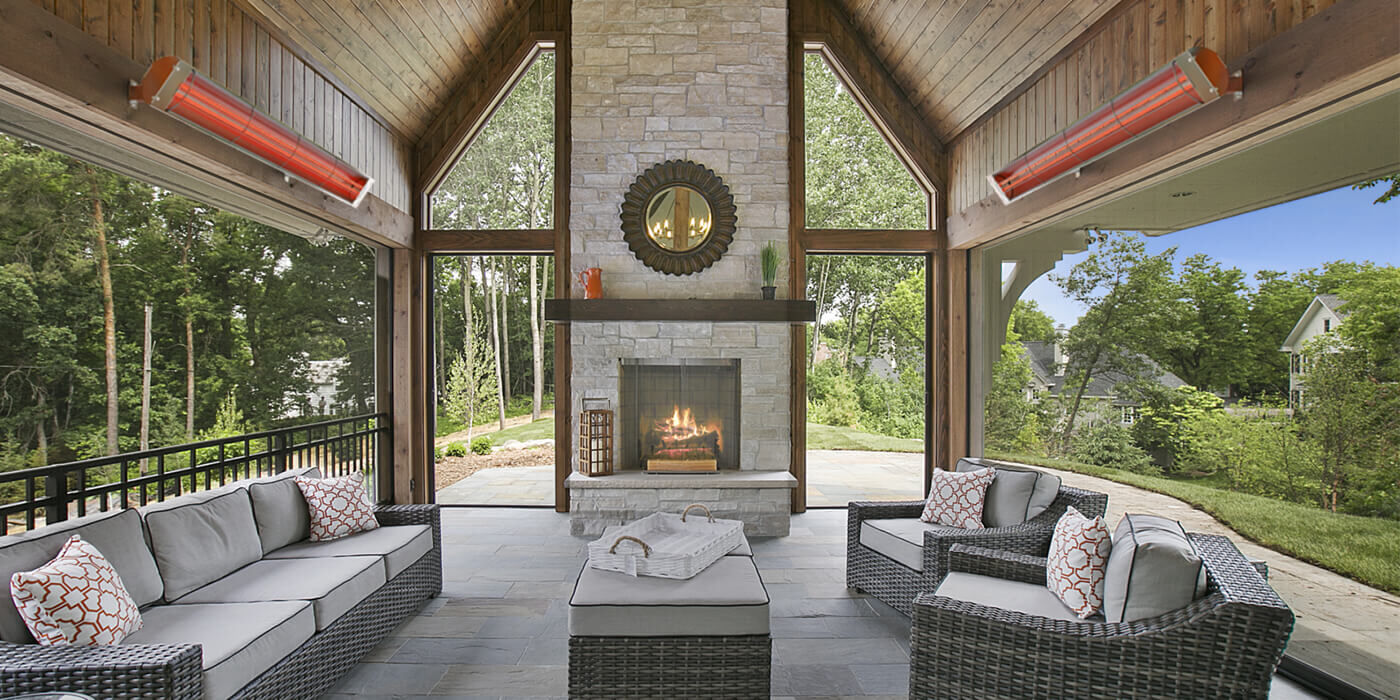
Mount Heaters to Warm an Entire Wall Zone
If you have a built-in bench seat or a long dining table, wall-mounted heaters excel at distributing consistent heat from above.
Pro Tip:
Use multiple low-wattage heaters instead of one high-watt model for a more even spread.
Keep Heaters Away From Wind Paths
A heater placed in the path of cold wind will lose efficiency. Position freestanding models in sheltered spots — near walls, tall planters, or pergola posts — so the heat can build up around your guests.
Avoid Overcrowding the Heat Source
Give your heater space to operate safely. Avoid placing fabric décor, outdoor curtains, hanging plants, or umbrellas too close.
This is both a safety and an efficiency issue — restricted airflow means reduced heat.
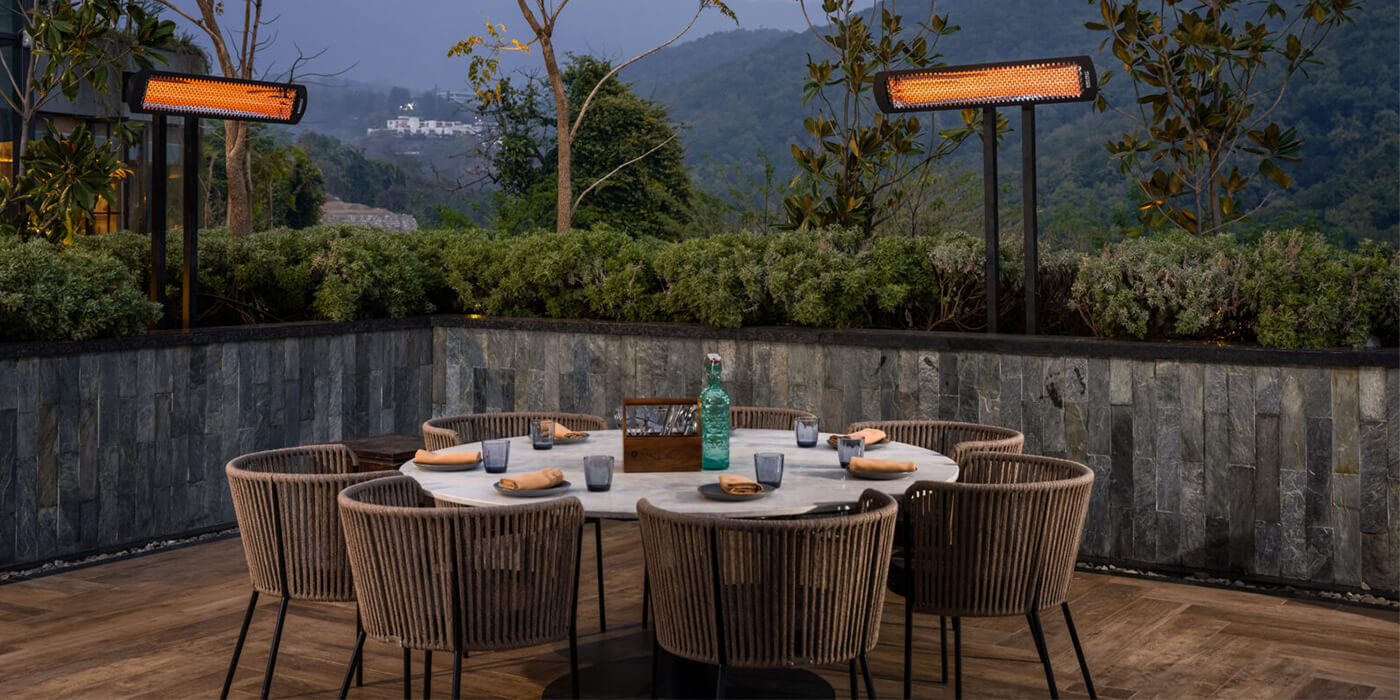
Blending Patio Heater Decor Into Your Outdoor Aesthetic
A patio heater can be more than functional — it can be part of your style story. Below are ways to make your heater feel like an intentional design element, not an afterthought.
Match Finishes With Your Furniture
- White heaters are popular because they blend seamlessly into their surroundings.
- Stainless steel heaters pair well with modern or coastal designs.
- Matte black heaters fit seamlessly with contemporary or industrial spaces.
- Bronze or brushed copper complements rustic, lodge-inspired, or Mediterranean patios.
Treat the heater finish like you would hardware or accent metals — it should coordinate, not clash.
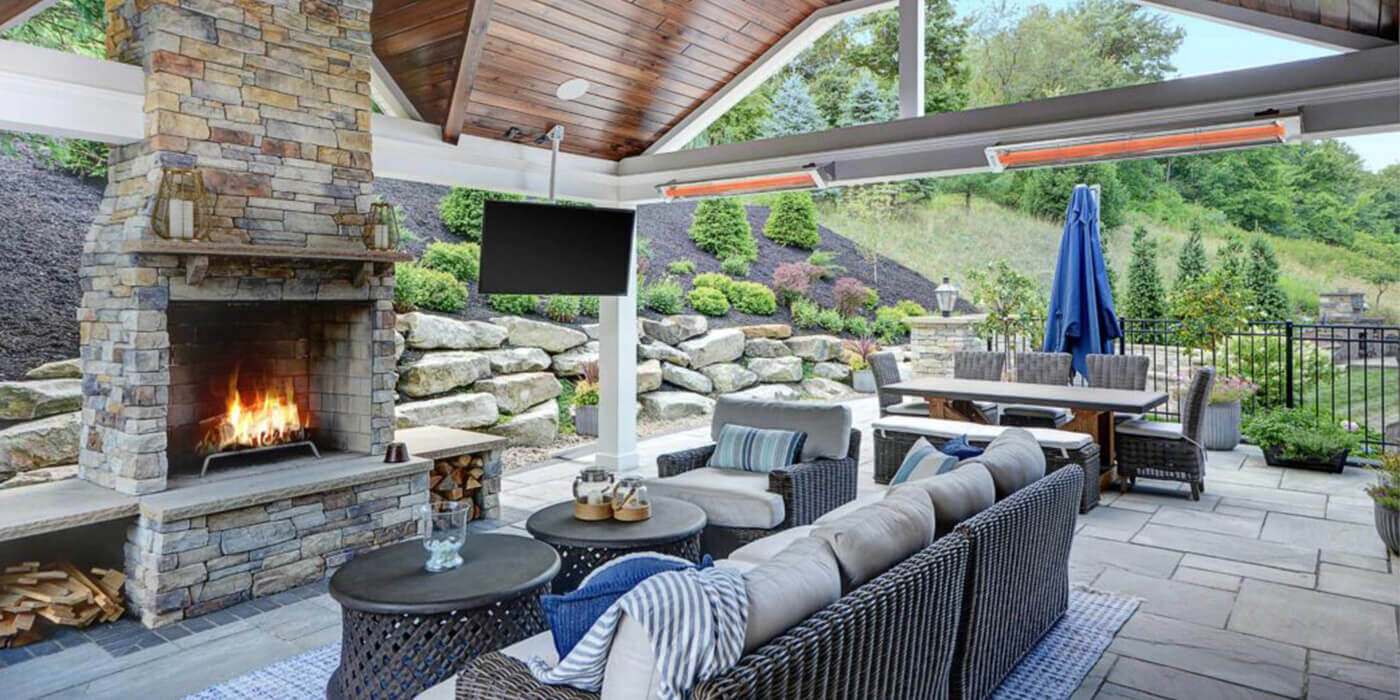
Incorporate Vertical Design Elements
A freestanding heater adds height to your space, so balance it with other tall pieces:
- Potted trees
- Lantern clusters
- Pergola beams
- Tall outdoor shelving or storage
This helps the heater feel part of a curated grouping.
Create a “Heat + Glow” Zone
If your heater features visible flames or LED lighting, use that glow as part of your ambiance strategy.
Complement it with:
- String lights
- Pathway lanterns
- Warm-tone LED sconces
- Tiki torches
Layering light sources makes your patio feel intentional and cozy.
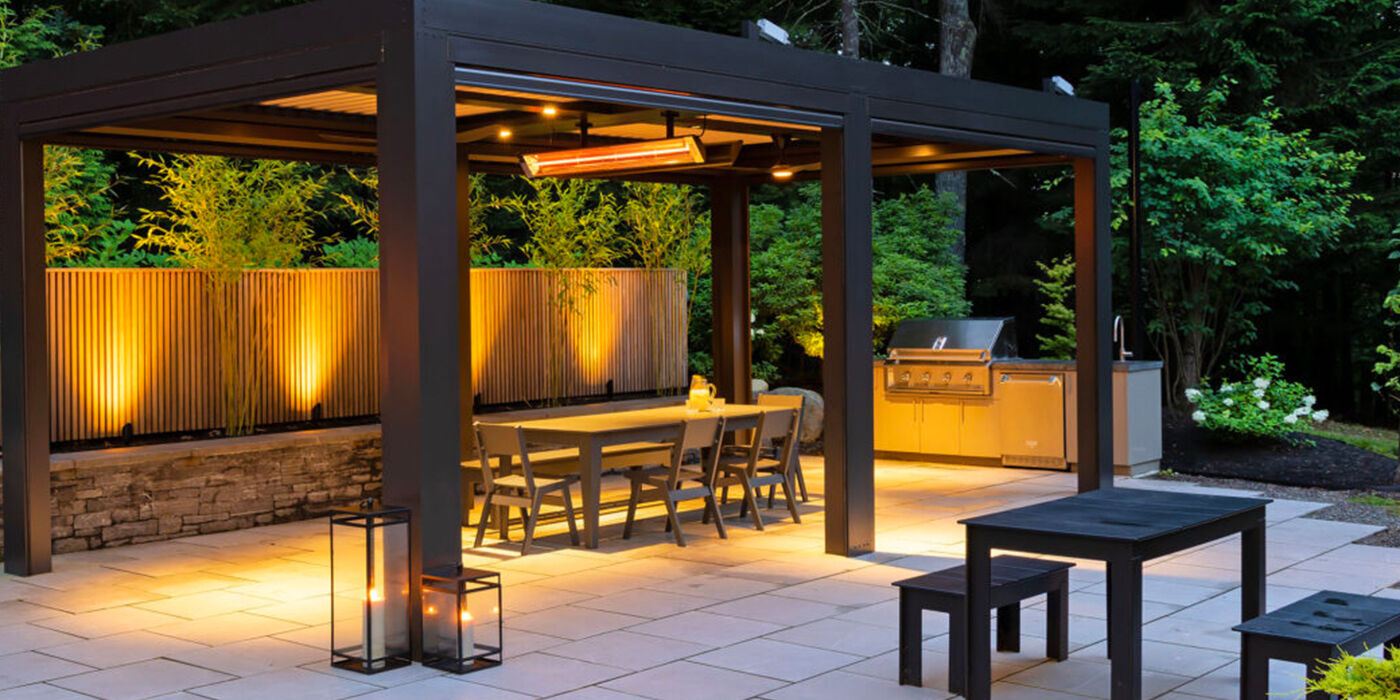
Build Around a Theme
For example:
- Modern minimalism – sleek mounted heaters, low-slung sectionals, monochrome planters
- Mountain lodge – bronze tower heater, stone accents, textured throws
- Mediterranean courtyard – clay planters, mosaic tables, rustic bronze heater
- Urban luxury – stainless tower heater, glass railing, geometric décor
The heater should reinforce your chosen aesthetic, not interrupt it.
Creating Functional Zones Around Heat
Warmth encourages gathering — so use your heater to guide how people use your outdoor space.
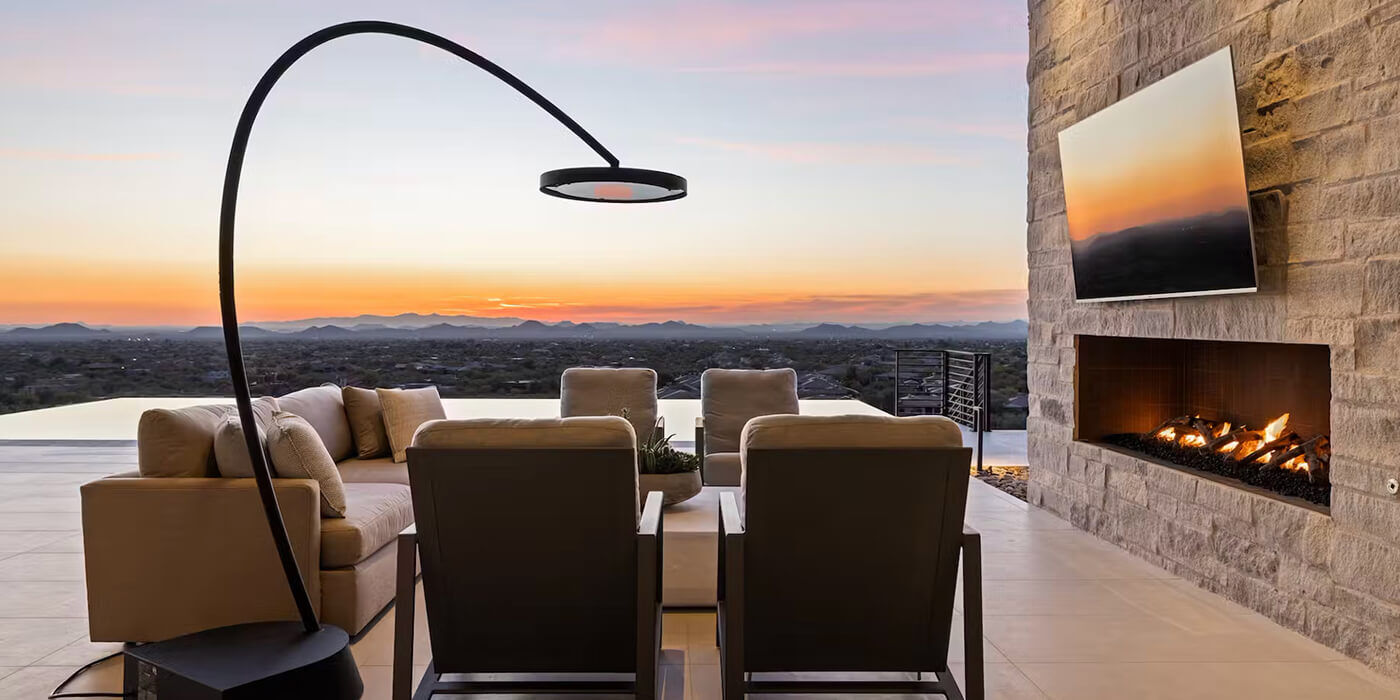
Warm Conversation Zone
Place your primary heater near lounge seating:
- Sectionals
- Adirondack chairs
- Outdoor loveseats
- Barrel chairs
This builds your main hangout spot.
Warm Dining Zone
Wall or ceiling-mounted patio heaters are ideal for outdoor dining because they don’t take up floor space. Install one or two above the dining table at a slight angle.
Warm Walkway or Transition Area
If your patio leads to a pool, garden, or spa, placing a heater along the transition helps connect the spaces and enhances nighttime usability.
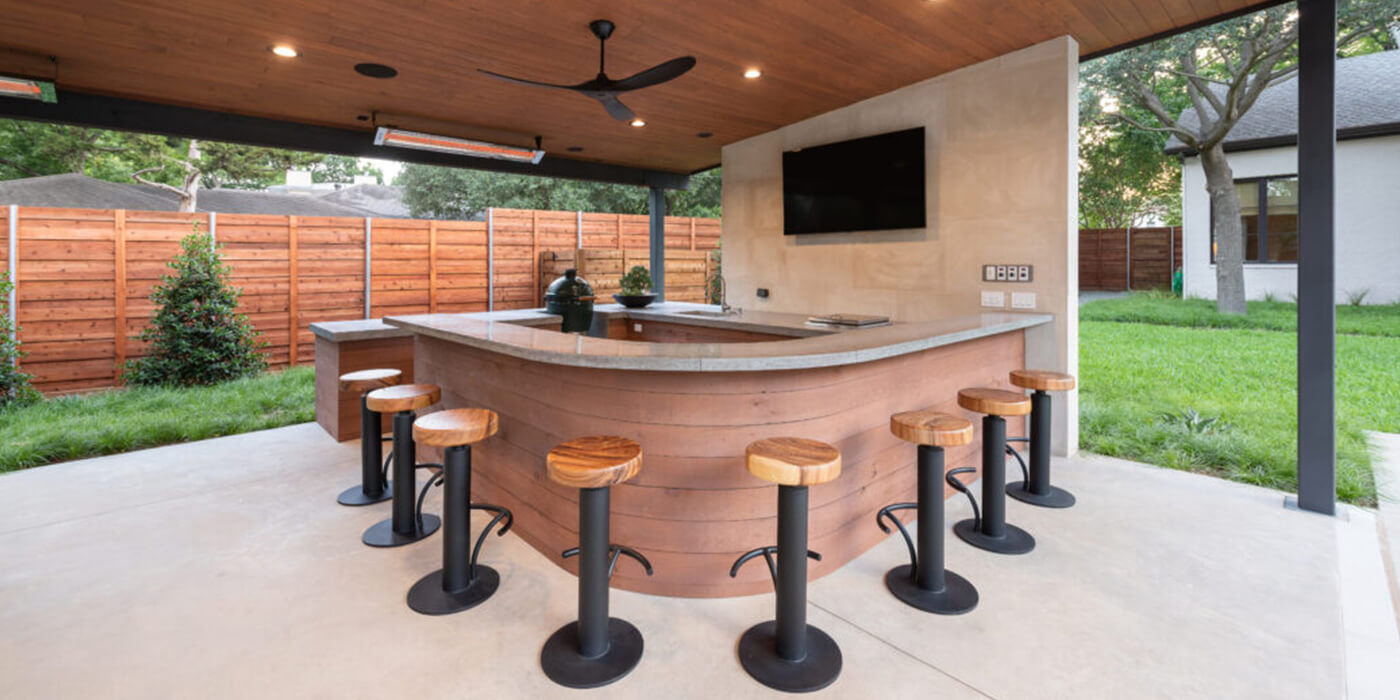
Warm Outdoor Kitchen or Bar
Keep guests comfortable at the bar rail or prep area by placing heaters near serving spaces — but always follow clearance rules to avoid heating appliances or overhead cabinets.
Safety Considerations (Stylish Doesn’t Mean Risky)
Even the best design takes safety into account:
- Maintain clearance distances recommended by the manufacturer.
- Ensure stable placement — freestanding heaters should sit on flat, hard surfaces.
- Never place heaters under low eaves or fabric awnings unless they’re rated for it.
- Keep propane tanks easily accessible yet discreetly tucked away.
- Use outdoor-rated electrical outlets for electric models.
A heater that’s safe is also a heater that performs at its best.
Bringing It All Together
A well-designed outdoor space blends warmth, style, and functionality. With the right type of heater, smart placement strategies, and cohesive patio heater decor, you can create an outdoor oasis that feels welcoming year-round.
Whether you’re hosting dinner parties, enjoying quiet nights by yourself, or transforming your backyard into a stylish retreat, your patio heater can be the centerpiece of comfort and ambiance.
FAQs
Most freestanding patio heaters require at least 3 feet of clearance around the sides and 2 feet above — though always check the specific model guidelines.
For wall-mounted heaters, maintain the manufacturer’s recommended distance from furniture and fabrics.
Yes — if the heater is certified for covered or semi-enclosed spaces. Electric models are generally safest for covered areas, while propane heaters require stricter clearance and ventilation.
For small patios (under 150 sq. ft.), one heater usually works. Medium spaces benefit from two heaters placed diagonally. Large patios or long dining tables may require multiple mounted heaters for even coverage.
Position the heater just outside your main seating area at a slight angle so heat radiates inward. Avoid wind paths, keep it on flat ground, and don’t place it directly behind chairs — side positioning provides more comfortable, even coverage.
We’re Here to Help
Do you have more questions about patio heaters? Call our NFI Certified experts today at 800.919.1904!
More Resources
Not sure which patio heater to get? Explore the ultimate outdoor heater buying guide.
Learn how you can boost your business with patio heaters.
Explore Bromic’s impressive patio heater collection.
 |
Nick Janco is a seasoned Technical Sales Representative with a decade of experience at Woodland Direct. As an NFI-Certified Master Hearth Professional, Nick is dedicated to helping his clients seamlessly integrate fire features into their homes, ensuring every detail is perfectly executed. While he's trained to assist with any fire-related project, Nick specializes in patio heaters. He's helped thousands of satisfied clients find the best heating solutions, offering valuable design, safety, and installation advice. Outside of work, Nick often spends time on the green enjoying a round of golf with his 5-year-old son. Call Nick or one of our experts in fire at 800.919.1904. |